Make an Appointment

Varicose Veins Treatment

Advanced, minimally invasive vein care focused on pain relief, better circulation, and faster recovery.

Understanding and Managing Varicose Veins

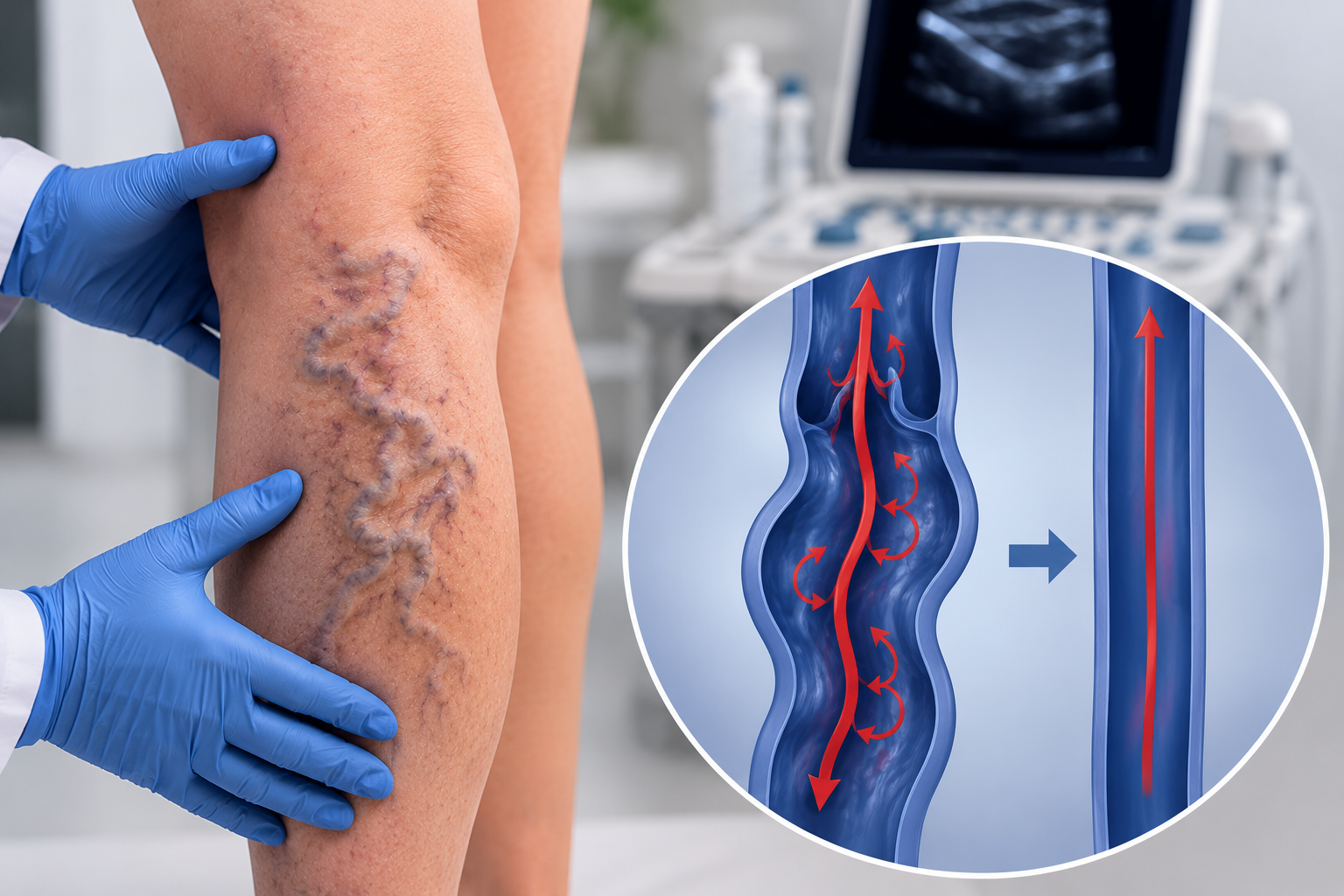
Varicose veins are enlarged, twisted veins most commonly seen in the legs. They can cause heaviness, swelling, cramps, burning sensation, skin discoloration, and persistent pain. Varicose veins are abnormally enlarged, twisted, and surface-level veins. They commonly develop in the legs due to faulty or weakened vein valves and are more frequently seen in women over the age of 40, while they are relatively less common in men. At Pandey Diagnostics Center, we provide Doppler-guided vein mapping and personalized non-surgical or minimally invasive treatment pathways based on your condition stage.

  • Accurate diagnosis with Color Doppler vein study
  • Customized treatment planning for each patient
  • Day-care procedures with minimal downtime
  • Follow-up focused on long-term symptom control
Quick OPD Evaluation Minimally Invasive Patient-Safe Protocols
Varicose Veins specialist treatment at Pandey Diagnostics Center
Vein Care Precision-guided treatment planning

Spider Veins VS Varicose Veins

Both are vein conditions, but their size, depth, symptoms, and treatment needs are different.

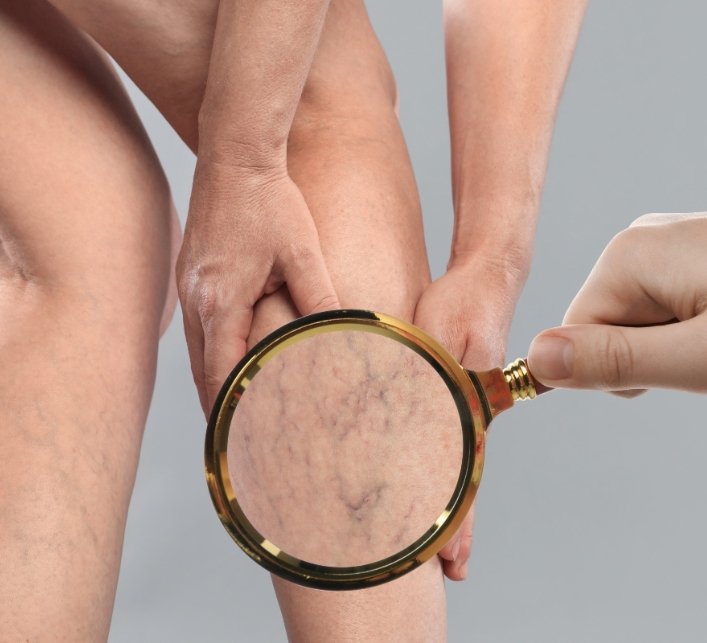
Spider veins appear as thin red or blue web-like lines near the skin surface

Spider Veins

Spider veins are thinner than varicose veins and are located close to the surface of the skin. They are red or blue in color and can appear on the legs or even the face. Their shape varies and they often look like a spider web or branching pattern. Spider veins are generally considered a mild condition and are mostly a cosmetic concern, though sometimes they may cause slight discomfort or burning.

  • Thin red, blue, or purple thread-like veins
  • Usually flat and close to the skin surface
  • Often cosmetic, with mild discomfort in some cases
  • Common on legs and around ankles
Varicose veins are enlarged, bulging veins that may cause pain and swelling

Varicose Veins

Varicose veins are larger, swollen, and twisted veins that usually appear on the legs. They are typically dark purple or blue in color and are more prominent. Unlike spider veins, they can cause more serious symptoms such as aching pain, heaviness, swelling, itching, and skin changes. In some cases, they may lead to complications if not treated.

  • Larger, twisted, bulging blue or purple veins
  • Raised veins with heaviness, pain, and swelling
  • Can progress to skin changes and ulcer risk if ignored
  • Needs medical evaluation and stage-based treatment

Varicose Veins: Causes, Signs, and Risks

If your legs feel heavy, swollen, or painful, this quick guide helps you understand why and when to seek treatment.

Understanding Varicose Veins

Varicose veins educational visual - overview and risk concepts

What Is Vericose Veins

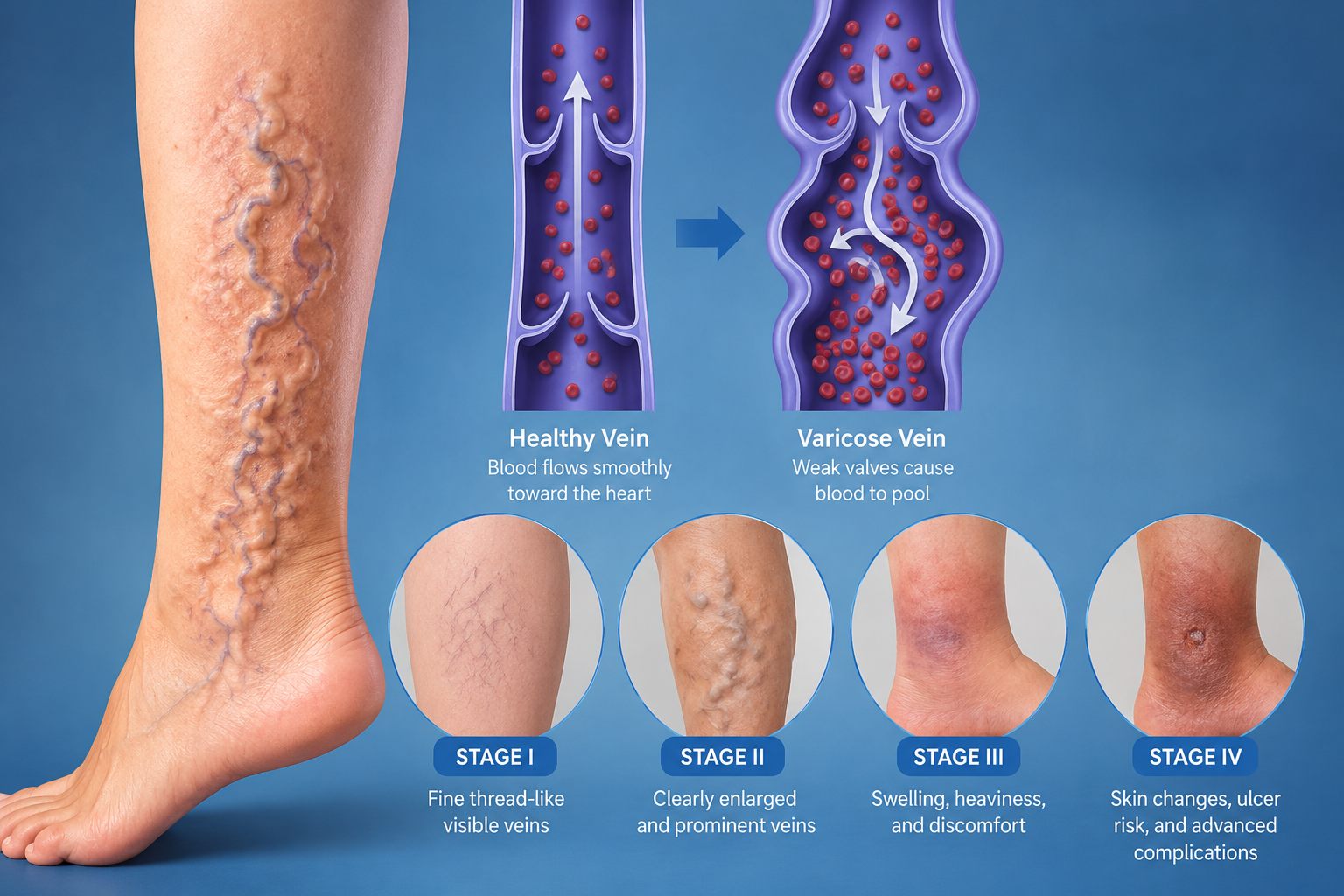
Varicose veins are enlarged, twisted, rope-like veins commonly seen in the legs. They develop when vein valves become weak and blood starts pooling instead of flowing smoothly back toward the heart.

Common Stages

  • Stage I: Fine thread-like visible veins
  • Stage II: Clearly enlarged and prominent veins
  • Stage III: Swelling, heaviness, and discomfort
  • Stage IV: Skin changes, ulcer risk, and advanced complications

Causes and Symptoms

Varicose veins causes and symptoms educational chart

Why It Happens

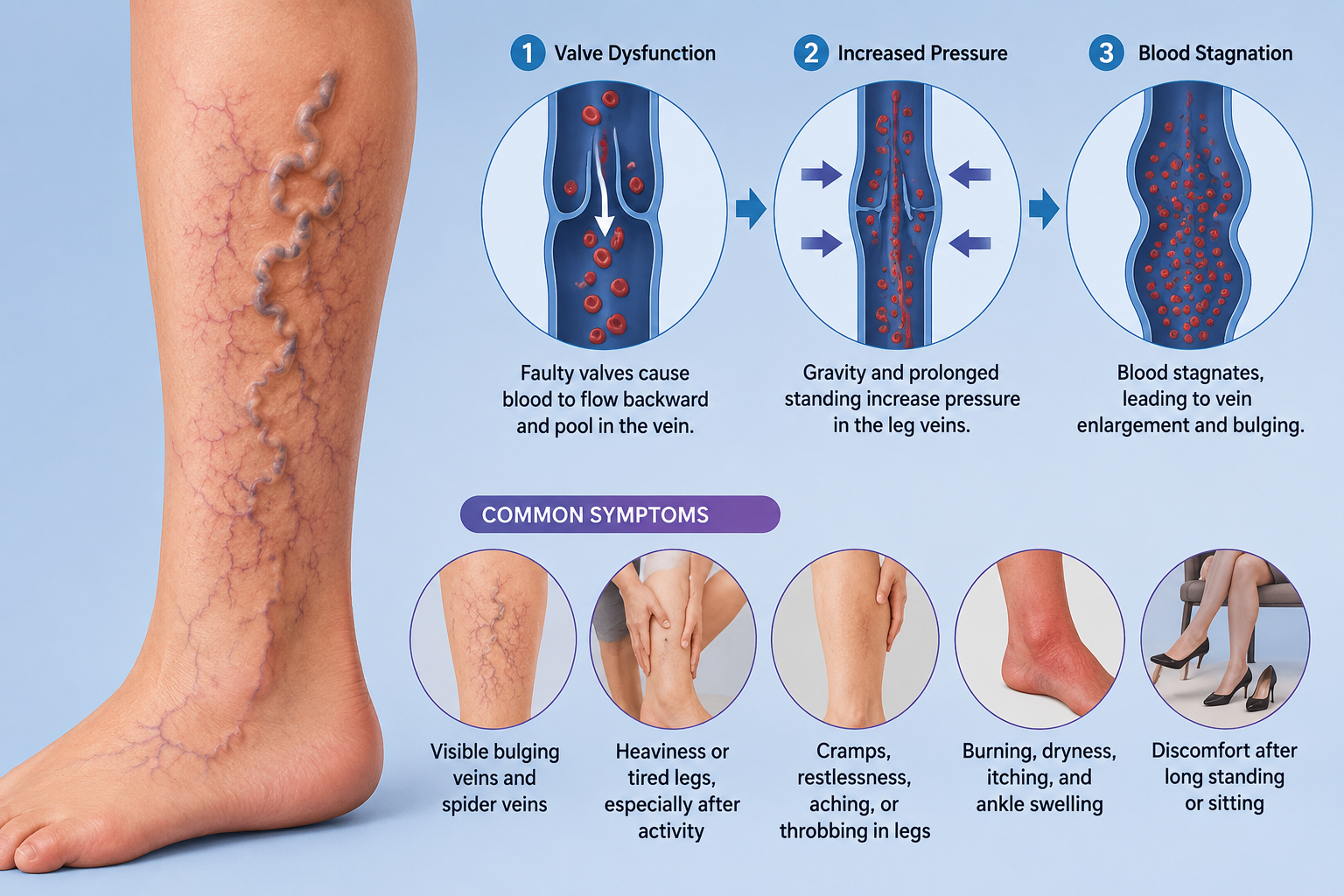
  • Valve dysfunction inside the veins causes backward blood flow.
  • Gravity increases pressure in leg veins, especially during prolonged standing.
  • Blood stagnation leads to vein enlargement and visible bulging.

Typical Symptoms

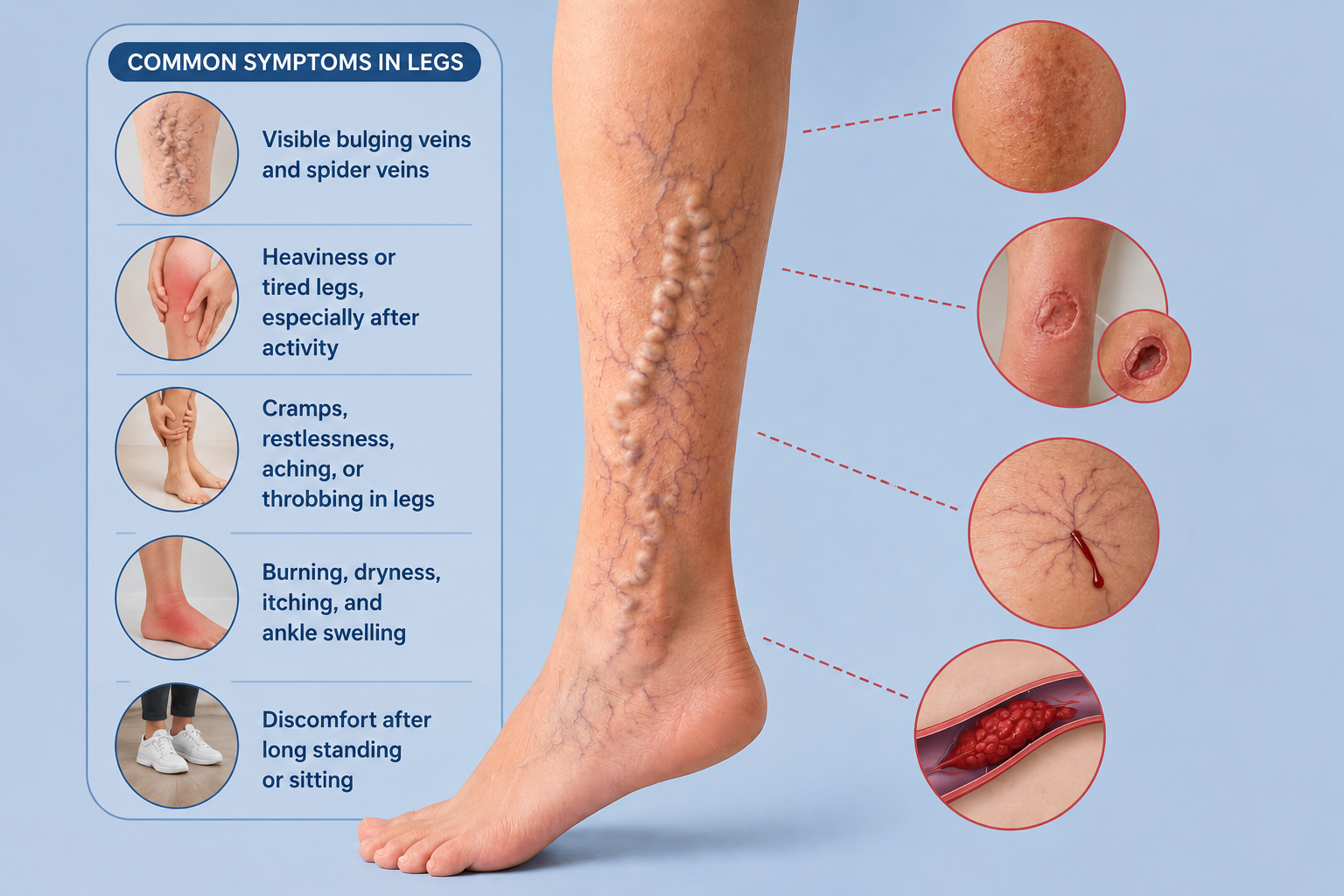
  • Visible bulging veins and spider veins
  • Heaviness or tired legs, especially after activity
  • Cramps, restlessness, aching, or throbbing in legs
  • Burning, dryness, itching, and ankle swelling
  • Discomfort after long standing or sitting

Risk Factors and Complications

Varicose veins risk factors and complication stages guide

Major Risk Factors

  • Increasing age
  • Family history of varicose veins
  • Female hormonal changes and pregnancy
  • Obesity and low physical activity
  • Long hours of standing or sedentary lifestyle

Possible Complications if Ignored

  • Skin discoloration around affected area
  • Venous ulcers (non-healing painful wounds)
  • Bleeding from fragile superficial veins
  • Blood clot-related concerns (requires urgent medical review)
  • Progressive pain, swelling, and reduced quality of life

Step-by-Step Varicose Veins Care Pathway

Every patient receives a structured protocol from diagnosis to recovery guidance.

01

Clinical Evaluation

Detailed symptom review, physical examination, and history assessment to understand severity and impact.

02

Doppler Vein Mapping

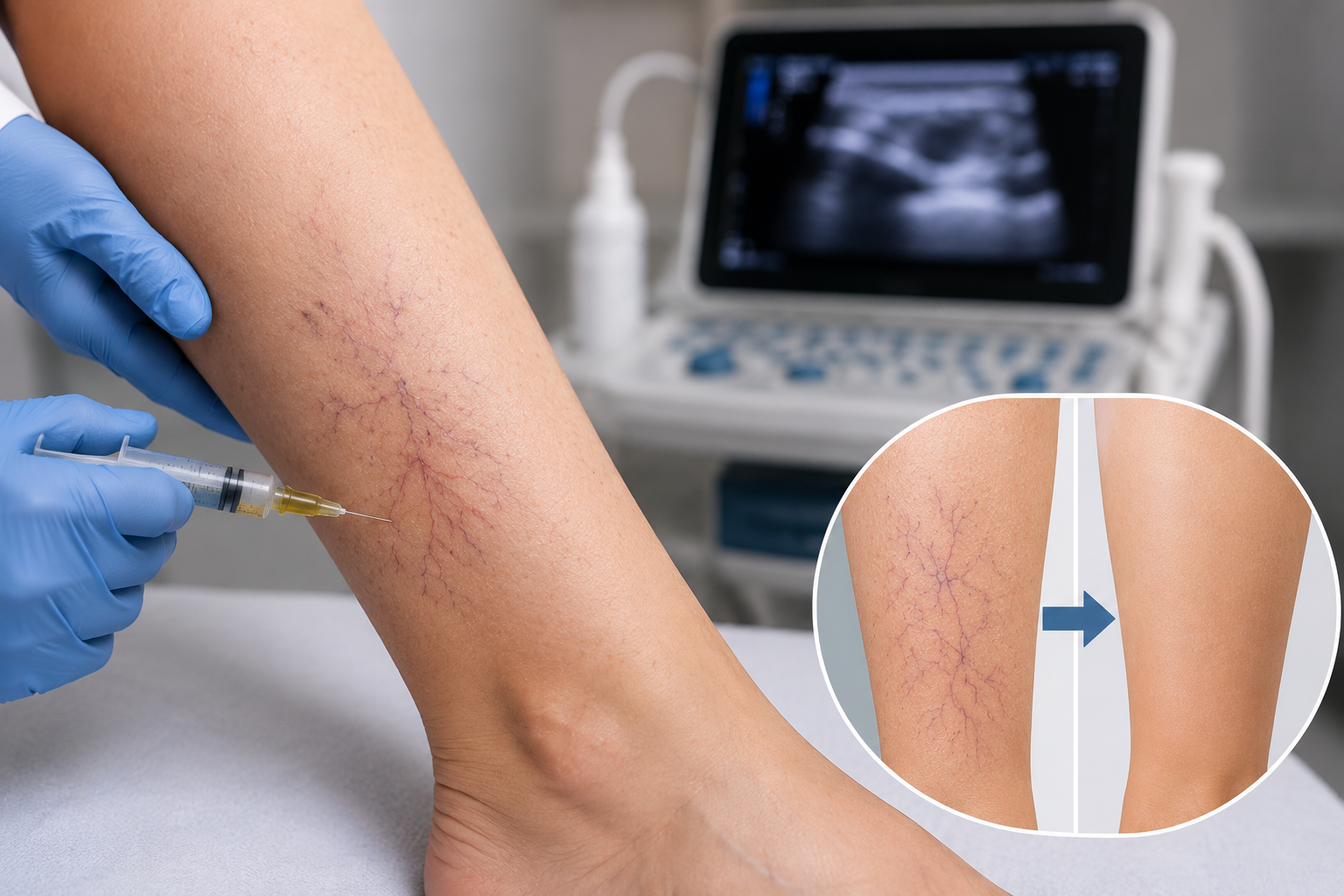
Color Doppler ultrasound identifies refluxing veins and helps plan targeted treatment zones accurately.

03

Procedure Planning

Suitable options such as laser ablation, sclerotherapy, or combined techniques are selected as per vein pattern.

04

Recovery & Follow-up

Post-procedure care, activity guidance, compression advice, and follow-up scans ensure durable outcomes.

Key Benefits of Modern Varicose Veins Intervention

Improves pain, heaviness, and swelling
Minimally invasive with faster return to routine
Low blood loss and no major stitches
Better cosmetic appearance of legs
Reduces risk of progression and skin damage
Image-guided precision for safer outcomes

Frequently Asked Questions

Quick answers to common patient concerns before planning treatment.

Is varicose veins treatment painful?

Most modern procedures are minimally invasive and done with local anesthesia. Patients usually report mild discomfort rather than severe pain.

How long does the procedure take?

Depending on the vein pattern, treatment generally takes about 30 to 90 minutes as a day-care process.

Will I need admission in hospital?

In most cases, admission is not required. You can usually go home the same day with post-care instructions.

Can varicose veins come back after treatment?

Properly treated target veins usually remain closed, but new veins can develop over time. Follow-up and lifestyle care reduce recurrence risk.

When can I return to normal activity?

Light walking is often advised the same day. Most patients resume routine work quickly, based on individual recovery.

Do I need Doppler before treatment?

Yes. Color Doppler mapping is essential for accurate diagnosis, procedure planning, and safer targeted intervention.

Need a quick consultation for diagnostic testing?

Speak with our team now and get guidance on the right scan, preparation, and appointment slot.

 Call Now